I’ve spent nine years behind the monitors, in the back offices, and cramped into tournament hotel rooms. I’ve watched star players with mechanical aim that could pixel-flick a fly off a wall crumble under the weight of a three-day tournament bracket. I’ve seen coaches look at a player who can’t string two sentences together and call it a "lack of discipline."
Let’s be clear: calling burnout a lack of discipline is the single fastest way to destroy an organization’s ceiling. You aren’t fixing a "laziness" problem; you’re managing a biological systems failure. When you play back-to-back matches, your brain isn’t just "tired"—it is experiencing a measurable decline in executive function and cognitive bandwidth. If you treat recovery as a luxury rather than a mandatory component of your training schedule, you’re essentially asking your engine to run red-line until the gasket blows.
So, the question isn’t about how to "optimize" your life—a phrase I’ve grown to loathe for its utter lack of utility. The question is: what changes on Monday? If your recovery routine looks the same after a tournament as it does on a Tuesday afternoon practice session, you aren’t recovering. You’re just delaying the inevitable crash.
The Physiology of the Performance Dip
Most players view cognitive fatigue as a vague feeling of "being burnt out." In reality, it is a clinical drop in your ability to process information. When you are deep into a tournament, your prefrontal cortex—the area responsible for complex decision-making, emotional regulation, and spatial awareness—starts to struggle. This is why you see "tilt" patterns emerge: a player who is usually calm suddenly starts forcing ego-peeks or missing macro-rotations.
This isn't about skill; it’s about cognitive downtime. If you do not force your brain into a state of recovery, it will take that downtime involuntarily. That’s why you see "brain fog" during the grand finals of a major. You are literally watching a player's reaction time degrade because their synapses are firing in a depleted chemical environment.
The Sleep Myth Trap
I keep a running list of sleep myths that teams still repeat in the locker room. Let’s kill the biggest one right now: "I’ll just catch up on sleep on Sunday."

You cannot "catch up" on lost sleep quality. Sleep isn’t a savings account you can overdraft and pay back with interest. When you disrupt your circadian rhythm with late-night scrim spillover or post-match adrenaline spikes, your REM cycle—which is essential for memory consolidation and emotional processing—is severely compromised. You can sleep for 12 hours after indica vs sativa sleep a tournament, but if the quality was garbage, your reaction time the next morning will still show a 10–15% deficit compared to your baseline.
Recovery as Training: Building the Protocol
If you aren't treating recovery as a specific, scheduled training block, you aren't a professional. You’re a hobbyist with better gear. Recovery should be viewed through the same lens as your aim-trainer reps or your VOD reviews.
Here is how you structure your post-match protocol to actually move the needle:
Timeframe Protocol Objective Immediate (0-30 mins) Low-Stimulus Exit Lower heart rate; disconnect from the "fight-or-flight" state. Mid-Term (30-90 mins) Cognitive Downtime Mental "unloading" via non-screen activity. Pre-Sleep (90+ mins) Environment Control Trigger melatonin production/parasympathetic response.1. The Low-Stimulus Exit (The "De-Grit" Phase)
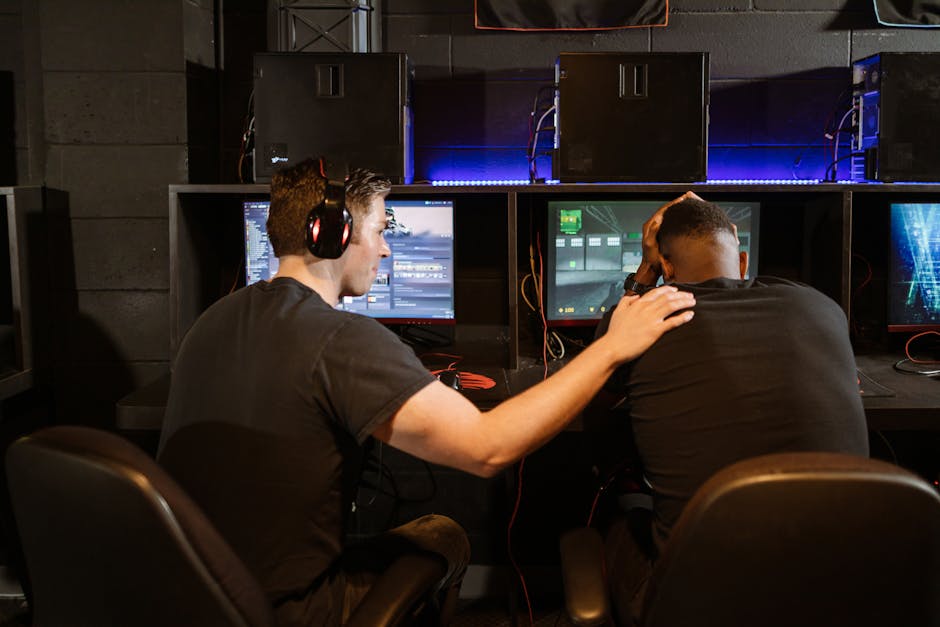
The moment a match ends, your dopamine levels are spiking (win or lose). You need to bring your heart rate down immediately. Avoid checking social media, forums, or post-game stats for at least 30 minutes. The social media feedback loop is the death of recovery; it keeps your amygdala engaged in the previous match’s stress. Instead, get away from the hardware. Physical movement—a slow walk, some light stretching—is non-negotiable here. It tells your body the "threat" of the match is over.
2. Cognitive Downtime and the Focus Reset
You need a focus reset. This doesn't mean watching YouTube videos; that is just different, lower-stakes stimulation. You need "boredom." Boredom allows the brain to transition from focused task-orientation to the "default mode network," which is where true cognitive restoration happens. Try 15 minutes of an activity that requires zero decision-making: folding laundry, listening to non-lyrical music, or simply staring at a wall. It sounds like wasted time, but it is actually the most efficient way to clear your "RAM."
3. Breathing Exercises for System Regulation
When I worked with our team's strength coach, we drilled a specific breathing protocol into the players. It’s not "meditation" in the mystical sense; it’s a physiological hack. When you’ve been grinding for 8 hours, your nervous system is likely stuck in a sympathetic (stress) loop. You need to trigger the parasympathetic (rest and digest) system.
- Box Breathing: Inhale for 4 seconds, hold for 4, exhale for 4, hold for 4. Repeat for 5 minutes. The Physiological Sigh: Two sharp inhales through the nose followed by one long, extended exhale through the mouth. This is the fastest way to offload carbon dioxide and lower stress levels in real-time.
Reducing Late-Night Scrim Spillover
One of the biggest issues in tier-2 and tier-3 rosters is the "just one more hour" mentality. Coaches and players think that if they scrim until 2:00 AM, they are somehow "outworking" the competition. They aren't. They are just ensuring that everyone is performing at 60% capacity the next day.
My advice on this is simple: Kill the spillover. Set a hard cap on the workday. If the match ends, you have a 60-minute window to review the VOD, and then the equipment turns off. Period. If you need more time, you start earlier the next day, you don't end later. The blue light from your monitors, combined with the high-stakes decision-making required for gameplay, is the enemy of a deep sleep cycle. If you hit the pillow with a brain that’s still processing crosshair placements, you aren't resting.
The "Monday" Check-In
After you’ve had a weekend of back-to-back matches, the temptation is to jump right back into the grind on Monday to "fix the mistakes." This is a trap. Monday should be your lowest-intensity day. It should be reserved for light strategy talk and VOD reviews that don't require high-speed reaction or intense focus.
Ask yourself: What changes on Monday? Does the schedule reflect the fatigue of the weekend, or are you doubling down on the same hours that burned you out in the first place? If you don't adjust your workload based on your physiological recovery, you are just waiting for an injury or an inevitable performance cliff. Burnout isn't a badge of honor. It’s a design flaw in your training schedule.
Final Thoughts: Moving Beyond "Grind Culture"
Esports is moving toward a more professional model, but we are still stuck in the "all-nighters are a virtue" era. We glorify the exhaustion of the player who stays up until dawn. It’s time to stop romanticizing the burnout.
If you want to win, you have to be the most recovered person in the server. That means taking your cognitive downtime seriously, mastering your breathing exercises for the moments when the pressure spikes, and having the courage to walk away from the screen when your brain is toast.
The game is won in the lobby, in the aim-trainer, and in the VOD room. But it’s lost in the bed, in the kitchen, and in the failure to disconnect. Prioritize the recovery, and the performance will follow. Ignore it, and you'll find yourself "disciplined" right into a retirement announcement.
Looking for more ways to standardize your team's recovery? Check my next piece on "Nutritional Windows for High-Stress Gaming Blocks" where we break down why that energy drink at 11:00 PM is actively sabotaging your tournament performance.