Let’s talk about Tuesday at 3:00 PM. Not the idealized Tuesday you see on LinkedIn where someone is closing a deal with a matcha latte in one hand and a fountain pen in the other. I’m talking about the actual, lived-in Tuesday at 3:00 PM. Your eyes are dry, the inbox is staring you down like a debt collector, and your brain feels like a browser with forty tabs open—and you can’t figure out which one is playing that annoying, distorted audio.
For eleven years, I sat in editorial offices and creative studios, watching brilliant people crumble. We spent a decade talking about "hustle" and "output." We ignored the fact that the people doing the work were being slowly dismantled by their environments. We treat our workspace atmosphere like it’s merely background noise, a static stage for our "productivity." But your workspace isn’t a stage. It’s an extension of your nervous system.
If your environment is screaming at you, you cannot produce work that whispers of clarity and insight. Let’s break down why your workspace vibe is the difference between a career of burnout and a career of craft.
The Sensory Science of Creative Focus
When I hear someone talk about "vibe" as if it’s just about having a succulent or a nice lamp, I roll my eyes. That’s interior design. A workspace atmosphere is a sensory regulatory system. Your brain is constantly scanning your surroundings for threats. In our primitive history, a "threat" was a predator in the brush. Today, a threat is a pinging notification, the glare of an overhead LED, or the constant, subconscious processing of a cluttered visual field.
When we talk about creative focus, we are really talking about the ability to ignore everything except the task at hand. If your workspace is a sensory minefield, your prefrontal cortex is exhausted before you even start the first sentence. You aren’t "unmotivated." You are sensory-overwhelmed.
The "Noise" of Digital Healthcare and Algorithms
We are currently living through a moment where digital wellness platforms tell us to "breathe" while simultaneously sending us fourteen push notifications an hour to remind us to breathe. The irony is not lost on me. Social media algorithms are designed to exploit the same neural pathways as slot machines. They thrive on interruption. If your phone is sitting on your desk, face-up, you are essentially trying to focus while someone taps you on the shoulder every ninety seconds.
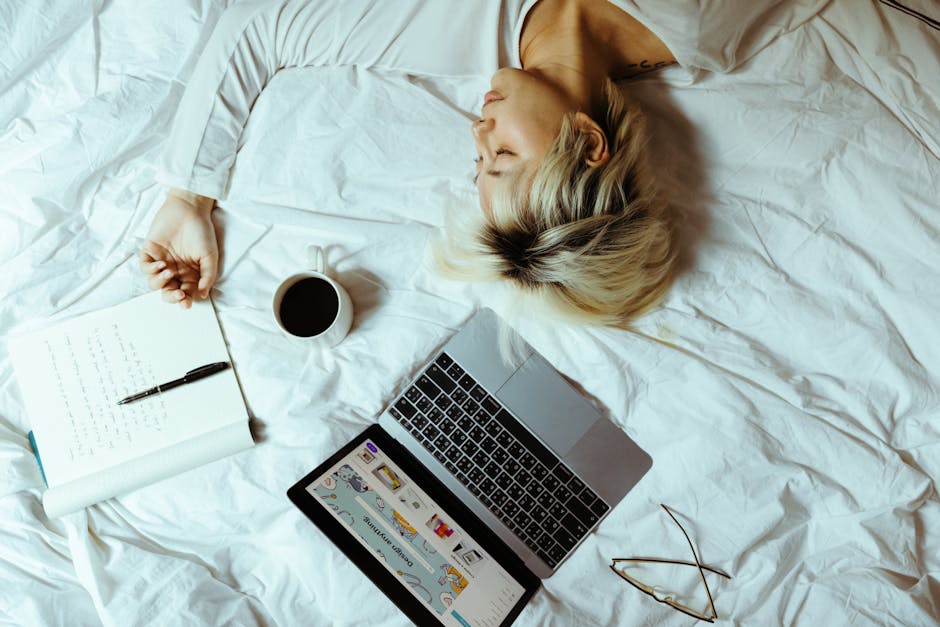
If an app is noisy—if it vibrates, blinks, or demands attention with a red bubble—it is taking up real estate in your working memory. I have deleted apps mid-sentence while writing this blog post because I heard a "ping" from a software platform that didn't deserve my focus. If the tool is a distraction, the tool is a failure, no matter how much the developers claim it aids "wellness."
Rituals: The Bridge into Focus
In my decade of coaching writers and designers, I’ve found that the biggest blocker to flow is the "hard start." We try to sprint from a cold stop. You walk in from the kitchen, you sit down, you open your laptop, and you expect to be a genius immediately. That is unrealistic, and frankly, it’s a recipe for resentment.
Rituals are your bridge. They are the transition from "human existing in space" to "human producing work." Crucially, they need to be small. If your ritual takes 20 minutes, you’ll skip it on follow this link a busy day. If it takes under two minutes, you have no excuse.
My Current List of 2-Minute Rituals
- The Lighting Shift: Turn off the "big light." Always. If you are working under a buzzing overhead office light at 3:00 PM on a Tuesday, you are actively inviting a cortisol spike. Switch to a warm lamp. The Sonic Boundary: Put on the same 90-second playlist or track every single time you sit down. I use a specific ambient brown noise track. It acts as a Pavlovian cue for my brain to drop into "Deep Work Mode." The Surface Clear: Take sixty seconds to wipe your desk. Not deep cleaning, just removing the coffee cups and the scrap paper. A clear surface acts as a visual "reset" for your mind. The Tech Sweep: Close every single tab that isn't directly related to the current document. If it isn't part of the task, it stays closed.
Burnout Prevention: Why Sleep and Vibe are Linked
I get genuinely angry at "productivity gurus" who suggest you can outwork your need for sleep. You can’t. And if your workspace vibe is stressful, you carry that stress into your evening. If your brain is constantly toggling between "high-alert mode" at your desk and "trying to relax" in your bed, your sleep hygiene will collapse.
Wellness isn’t a weekend retreat. Wellness is the culture you build in your daily work environment. If you feel like your workspace is a place of agitation, you are effectively living in a state of low-grade burnout. You recover by changing the environment, not just by "taking a vacation."
Comparing the Environments
Feature The "Chaotic" Workspace The "Sustainable" Workspace Notifications On, audible, constant. Muted, desktop-only, batch-checked. Lighting Harsh, flickering overheads. Soft, warm, focused task lighting. Visuals Clutter, cables, unfinished tasks. Clear desk, curated view, essentials only. Digital State 40+ tabs, social media open. "Focus" mode, single-tasking setup.How to Start Fixing Your Vibe Today
Stop looking for "inspiration." Inspiration is not magic; it’s a byproduct of a regulated nervous system. When you aren’t exhausted by your surroundings, inspiration has the space to actually arrive. Here is how you handle the next 24 hours:
The Tuesday 3:00 PM Audit: Next time you hit that slump, look around. What is bothering you? Is it the noise? The light? The phone sitting on your desk? Write one thing down that you can change for tomorrow. Ruthless Deletion: Go through your phone and your desktop. If an app sends you a notification that makes your heart rate go up—even slightly—delete it. Move it to a browser-only workflow, or delete it entirely. Physical Anchors: Pick one object that represents "work mode" to you. A specific coaster for your tea? A specific notebook? Keep it off the desk when you aren't working, and place it down only when the session begins.We need to stop pretending that professional output happens in a vacuum. You are a biological organism living in an environment. If you ignore the environment, you ignore the organism. And if you ignore the organism, the work will eventually stop coming. Make your workspace a place where your brain actually wants to live for a few hours a day. It’s not about being precious; it’s about being sustainable.

And for heaven’s sake, get some sleep. The "hustle" isn't going anywhere, but your capacity to handle it depends on whether you spent your Tuesday fighting your environment or flowing with it.